Theater Week: The Turn of a Padawan by Justin Gawron ’21

Happy Theater Week on WAM! Here is a Star Wars-inspired short film by Justin Gawron ’21, which was inspired by a short video assignment that ended up turning into a slightly longer project.

“The original assignment was only supposed to be from 30 seconds to a minute, but I decided that I wanted to have some more fun with it than just that. My brother and I started recording at 8:30 and filmed for three hours, and then I edited for 3 more. I also tried to employ some editing techniques that I knew were used in the original Star Wars franchise, like jump cuts to open the lightsabers. After the night was over, I had whittled down our hours of footage to just three minutes, but, in my opinion, it was well worth it. I had a great time making it with Dylan, plus the special guest appearance from my dad, and I couldn’t have done it without either of them.”

Justin Gawron
Posted in Film, Theater | Tagged , , , , , , | Leave a comment

Poetry Week: “I can’t see in this fog but it’s okay for now” by Jamie Paradis ’20

This poem was recently published by the acclaimed literary magazine Hanging Loose.

Posted in Poetry | Tagged , , , , | Leave a comment

Poetry Week: Reviews and Recommendations

Who’s your favorite poet? What’s the first poem you ever memorized? Which poetic form do you find most fun to read? Is there a particular poem that you’ve turned to for solace or distraction during these stressful times? Leave your answers to any of these questions (or just share general poetry reviews and recommendations) in the comments below!

Posted in Poetry | Tagged , , , | 1 Comment

Poetry Week: Ms. James recites “Keeping Quiet” by Pablo Neruda

Posted in Poetry | Tagged , , , , | Leave a comment

Poetry Week: “Playground” by Tiana Evans ’24

Playground

This was never fair,
From the beginning nor towards the end.
It will never be.
I recognize that as I look around me;
they recognize it too.
But what is it worth for them to care.

 As I walk around, 
My sneakers squeaking along the marble floors
I know I am not like them,
Nor will I ever be
I can not hide from what I am
Nor will they ever let me

What is it to them 
Whether I trip over my feet 
And land upon my head
Or whether I fall from a tree,
Tangled in my headphone wires
Hanging there dead. Where eventually,
They’ll see what had happened and how
History
Always
Repeats

But what should they care now
Using the name that broke my ancestors down in the first place 
As a joke, not caring whether my fellow brothers 
And sisters retaliate. They know not much will be done
Privilege before all else
They will never understand what I have feared;
Them

They would never understand the fear of hearing sirens
As you walk to your home, hoping they don’t see you
Though knowing you’ve done nothing wrong
Other than be born,
Different
They will never understand the fear
that paralyzes you as you get into the driver’s seat of a car
And drive like every other law-abiding citizen
Yet still wondering if this late turn signal
Or that U-Turn
Or that breath,
Would be your last

They do not, will not 
Ever know
Yet, I never expect them to
We are the dirt swept under the rug
In the home of the “land of the free”
So what are they to know?
How are they to know of such things at all

The school systems claim they try, 
Yet there are no improvements made
A few nobles try, but their cries 
Are lost among a sea of lies that never reach the surface
But drowned, to block out the sound of those words
“Black Lives Matter”

But what am I to do? 
I’m as much as a coward as they, 
But for reasons I deem plausible.
No matter how equal I may feel to them
My kinky hair, ebony skin, plump lips, big nose
They expose me for who I truly am
Something I can not hide

But when did I begin to want to hide
When did I begin to hate what I loved to show?
The day I
Was turned into their
Zoo animal

Pushing and pulling,
Poking and grasping, 
Gasping and teasing, for what?
Because my hair defies the laws of gravity yours 
is enslaved to?
Because it’s “exotic” and “different”
Or because I am exotic and different
A breed you’ve never seen

Well let me tell you something
I am not your mere plaything to toy with,
Something to keep your interest intact 
As you hold your silver spoon in your opposite hand
I am not the dirt on your floor
To be swept under the rug and forgotten
To forget what has crumbled me and left me on the dark, 
Cold ground in the first place
I will never be your hunt every time I walk on the street
Or drive a car
Or speak what I believe to be right

My life is not your toy
My pain and torture is not the butt of your jokes
My rights are not your plaything
My hair is not your playground

Posted in Poetry | Tagged , , , | Leave a comment

Poetry Week: Profe recites T.S. Eliot’s “The Wasteland”

“April is the cruelest month…” But it also is as good a time as any to read and recite poetry.

I have loved T.S. Eliot’s “The Waste Land” for over two decades. I’ve listened to wonderful recreations of the poem —read by Jeremy Irons, Fiona Shaw, and the poet himself.

Here’s my humble rendition of the first poem in the cycle: “The Burial of the Dead.” I learned English from a combination of reading this book and watching the Hollywood B movies that were pirated and broadcasted by Cuban state-run TV.

I used to recite Eliot’s poetry as I walked the waste land of Havana, in the midst of blackouts, in the mid- and late-nineties.

This new reality of social distancing has made me revisit the poem under very different circumstances.

Alexis Romay
Posted in Poetry | Tagged , , , , , , | Leave a comment

Nature Week: Painting by Samantha Witt ’22

Posted in Painting | Tagged , , , , | Leave a comment

Nature Week: NA Ducks

Ms. Fischer captured this image of Newark Academy’s resident mallards, who nest in the courtyard every year.

Posted in Photography | Tagged , , , , | Leave a comment

Nature Week: Painting by Selah Dungey ’22

“Bold Glare”
Posted in Painting | Tagged , , , , , | Leave a comment

Experimentation Week: Virtual Big Band

Newark Academy’s jazz band, Chameleon, performs “This Can’t Be Love” from their homes during lockdown. Vocals are by Yasmeena Sharif ’23.

Posted in Music | Tagged , , , , , | Leave a comment

Experimentation Week: Painted Shoes by Samantha Witt ’22

Stuck at home with paint but no canvas, Samantha Witt found yet another creative way to complete her art homework, giving a fresh new look to an old pair of sneakers.

Posted in Painting | Tagged , , , , , | Leave a comment

Experimentation Week: Video by Jelani Dean ’23

Jelani Dean experimented with creative video editing to express a feeling we’ve all become familiar with in quarantine—the sense that we’ve been stuck in a loop, doing the same three things over and over again. Enjoy!

“Clone Quarantine”
Posted in Film | Tagged , , , , , | 1 Comment

Experimentation Week: Food Dye Painting by Selah Dungey ’22

Stuck at home with only white paint, Selah Dungey didn’t let her lack of supplies stop her from completing her art homework—she used pink, purple and blue food coloring to create this pastel wolf, titled “Self-Image”.

“Self-Image”
Posted in Painting | Tagged , , , , , | Leave a comment

Experimentation Week: Funfetti Cake by Kayla Cohen ’21

This week, WAM is inviting members of the Newark Academy community to submit their adventures in new forms of art that they’ve explored during this period of social distancing. Kayla Cohen ’21 submitted images of her first foray into cake baking, a three-layer funfetti cake with buttercream icing. Send your creative experiments to wam@newarka.edu!

Posted in Other | Tagged , , , , , | Leave a comment

Pet Week: Ms. Fischer’s Chickens

“Chicken Run”

Fun Fact: I walk the girls out from the backyard to a special coop in the front yard every afternoon so they can get exercise, eat the grass and find worms. However, I mostly lead these chickens on parade so the neighborhood children (and many adults) can come visit them and see something different on their daily walks. I also have a chicken joke of the day to help build community and make people smile (or cringe).

“Jazz is ready for her close-up”

Q: What did the sick chicken say? 

A: I have the people-pox.

“Breakfast with Nelly and Sonia”
“Nelly takes a nap”

Posted in Photography | Tagged , , , , | Leave a comment

Pet Week: Art by Kylie Bill ’21

“Wilbur”
Posted in Drawing | Tagged , , , | Leave a comment

Pet Week: Art by Selah Dungey ’22

It’s Pet Week! Enjoy these captivating portraits by Selah Dungey ’22 of her gecko and dog. You can participate too! Submit art (visual or otherwise) depicting or inspired by your pet(s). Think beyond photography—try writing an ode to your goldfish or a short story from your cat’s perspective.

“Tesla”
“Magi”
Posted in Painting | Tagged , , , | Leave a comment

“Nature Series,” Quarantine Photography by Michael Pyo ’22

Below are four photographs taken by sophomore Michael Pyo during his spring break:

“These are meant to be seen as ethereal—an escape from disruptive forces, and an invitation to nature’s serene beauty.”

Posted in Photography | Tagged , , , , , , , , | Leave a comment

Quarantine Artwork by Stella Gilbert ’22

Below are several pieces created by sophomore Stella Gilbert while social distancing over spring break:

“Painting with watercolors has always been an outlet for me, especially when I get anxious or stressed. Seeing my friends taking on big artistic projects over break inspired me to try something new so I decided to learn how to work with oil pastels. I’ve never considered myself a visual artist before, but I feel like desperate times call for creative measures.”

Posted in Drawing, Painting | Tagged , , , , , , , , | Leave a comment

Quarantine Artwork by Kaya Patel ’22

Below are two pieces created by sophomore Kaya Patel while social distancing over spring break:

Posted in Painting | Tagged , , , , , , , , | Leave a comment

WAM’s April Challenges!

Posted in Other | Tagged , , | Leave a comment

Excerpt from “The Essence of Being Mr. Porcher,” a novel by Lily Sternlieb ’24

There are few in the world who, once seen, can never be forgotten; fewer whose words repeat in your mind, ringing with the same severity as when first uttered. But there is only one, one who makes others seem circumstantial, trivial; causes gods to appear so bland, so disposable, so unpolished: my friend, the stranger, Miss Alexandra Claire. Her features handsome, lips the color of stained redwood, almond eyes half-hidden by lashes curled like pulled sugar. Fluttering milk-white hands interrupting the steady stream of smoke gushing from the tip of a long black cigarette placed in between her fingers. Her shoulders draped with a tassel of fur, and her body dressed in a plum satin gown. 

In the early twenties I was working for my Uncle Edwin; 23 and new to the chaos that was city life. Edwin always joked, “Liam, there are things in this day and age people will pay anything for: power, information, and alcohol.” Then he would smile. “And here in my place, we may only serve one, but what we gain are the other two.” In the morning my uncle’s store posed as a bread shop, named Against The Grain, but the true business was a flight down in the cellar where my uncle ran one of the most exclusive speakeasies in Chicago history. We served the rich, the poor and all who wandered in between. And I, Liam Porcher, saw and observed the beauty and pain behind the world of dresses and desire. 

Continue reading
Posted in Fiction | Tagged , , | Leave a comment

Creative Posters from Ms. Tolmie’s 10th Graders

After reading Zora Neale Hurston’s Their Eyes Were Watching God, Ms. Tolmie’s sophomore English classes created posters blending ideas from the novel with a specific lens used to analyze literature from a chosen chapter in How to Read Literature Like a Professor by Thomas C. Foster. Examples of these analytical lenses include: “Every trip is a quest,” “Flight is freedom,” and “It’s all about sex… except sex.” The students were encouraged to take creative risks with their designs, blending printed work, artistic experimentation, and references to popular media. Below are a few of these posters.

Emma Lu, Sophia Chen, Selah Dungey
Stella Gilbert, Avi Parameshwar, and Kaya Patel
Katie Powers, Meredith Janay, Andrew Zhang
Posted in Other, Visual Art | Tagged , , , , , , , | Leave a comment

Photograph by Meredith Janay ’22

Meredith took this photograph on a 4th of July excursion with her camp age group to watch fireworks together in Bridgeton, Maine. She titled this photo “An Outing to Bumblef*ck, Maine.”

An Outing to Bumblef*ck, Maine
Posted in Photography | Tagged , , , , , , | Leave a comment

Call for applications: WAM needs new interns!

Linoleum print “Starlight” on recycled paper by Silvy Zhou ’21

The Writing, Art & Music blog, affectionately known as WAM, is a forum for NA students, staff, faculty, and alumni to share creative work and support one another. WAM offers a noncompetitive, judgment-free place to enjoy each other’s artistic adventures, from first drafts to award-winning work. To date, posts include drawings, paintings, photographs, sculptures, films, short stories, poems, memoirs, letters to the editor, op-eds, theatrical and literary performances, instrumental and vocal music, DIY tutorials, and more. The in-house blog typically publishes two posts per week, while the public blog usually features one.

Poetry by Ava Sharahy

WAM interns scout out NA’s hidden artistic talents, conduct interviews, write blog posts, encourage members of the NA community to submit, and occasionally contribute their own creative work. They also manage the blog’s Instagram and email accounts, create monitor ads, edit an annual WAM highlights reel, and gain skills in using WordPress to publish the blog and Asana to manage tasks. Opportunities may also be available to create content for the creative writing blog. Interns are expected to attend a weekly half-hour meeting and spend an additional hour per week on WAM-related tasks. Feel free to reach out to any of the current interns (Jamie Paradis, Alison Bader, Silvy Zhou and Stella Gilbert) with questions.

Still from stop-motion animation “Look at Me” by Jack Snyder ’19

There are two openings for WAM interns next year. Students currently in grades 8–11 are invited to apply. If you are interested in applying, please answer the following questions and email your application to Flannery James by 11:59PM on Sunday, March 29, 2020. Decisions will be announced in mid-April. New interns are expected to attend WAM meetings beginning in May and continuing throughout the 2020–2021 school year.

  1. Describe your prior experience/interactions, if any, with WAM. Why do you want to join WAM? (150 words max)
  2. Propose a potential WAM post. It could be about any creative project, event, or piece of art that you’ve encountered recently at NA—think art exhibits, plays, class assignments, dance recitals, etc. Or it could be something smaller—an interesting doodle by a classmate, a poem read at a coffeehouse. Whatever you choose, write a short description of the creative work, followed by a short explanation of why you believe this piece would be a good fit for WAM. (150 words max)

Posted in Other | Tagged | Leave a comment

“Devotion” by Annika Inampudi

cover art by Silvy Zhou ’21

“Foreign romance. The end of the world. A murderous plant. An impossible heist, a burning building. Pygmalion, with a twist.”

Annika Inampudi ’21 is a poet and writer. She has been nationally recognized by the Scholastic Art and Writing Awards twice for her prose pieces. Her self-published, debut book, “Devotion”, is a collection of ten short stories written over the past few years. She describes it as a collection which “re-examines and re-imagined the central themes of her own life”, creating an intricate portrait of brown identity, womanhood, and more.

Download the full PDF for free here.

AMERICAN BOY (Exerpt)

PART ONE: NAMES

I named my son after the sun because I never wanted him to forget his importance. It was him who we revolved around and it was him that I would come back to, forever and always. Sometimes he whines to me, saying that all his white friends make fun of him for having a girl’s name. He tells me his friends names and they feel like concrete in his soft mouth. Names like kitchen knives in my throat. Eric. Parker. Victor. My– Our language wasn’t made for names like that. I try to say “Victor” and it comes out all funny. Wick-torr. I named my son after the sun because I wanted him to remember that he was soft, that he comes from a country of tenderness. That he comes from a country of men who shirk violence, who take afternoon naps under the midday sun after a hearty meal instead, the ghost of ghee lining their sweaty lips.

My father refused to name me. I was a baby born quiet, doe-eyed and giving. He had not wanted a daughter, not during flood season. Money was sparse, and all daughters do is take it away. For most of the monsoon, he would not look at me. My mother named me after her mother, a stout woman with hair like ash and a face that would make a blind man sing. She took me home and taught me work before I could read. And three years later, when my brother was born, she took him to the Ganga and named him after the water. That year, it rained longer than it had before.

Surya brings a friend home from school and asks that I call him Steve instead. And I let him, because he is my only son and I want him to be free.

Posted in Fiction | Tagged , , | Leave a comment

Travel Photography by Alison Bader ’20

These photos were all taken on my iPhone 7 in Guanacaste, Costa Rica. In addition to going to the beach, I went to Bajos del Torro in Alajuela province as well as La Fortuna, near Arenal volcano.

This photo was taken mid-day of the beach view of Costa Rica.
This photo was taken during sunset by a pool overlooking the beach in Costa Rica.
This photo was taken of the sunset over the beach in Costa Rica. At the hotel I was at, the fire lights up every night when sunset starts.
Posted in Photography | Tagged , , | Leave a comment

Spanish poetry videos by Tess Kesler ’22 and Ryan Cheung ’21

Tess Kesler – “Oda a la cebolla” from Pablo Neruda:
“In Spanish 3 Honors, students are required to do a video-poem based on a piece from literary giants such as García Lorca, Pablo Neruda and José Martí. Tess did a terrific video with Neruda’s “Ode to the Onion”. Her vision captures the humor and complexity of the poem. Neruda found beauty and poetry in everyday items and Tess found images and music that awesomely complement the author’s vision. Great work!” —Ms. Ortega


Ryan Cheung – “Los espejos” from Jorge Luis Borges:
“Students in Spanish 3 Honors create a video-poem based on a piece from Spain or Latin America. Ryan did his on “Los espejos” by master Argentinian Jorge Luis Borges. Ryan portrays superbly Borges’s themes of duplicity and illusion, as mirrors could be enchanting and deceiving. The music he chose complements the mystery in the poem. Enjoy!” —Ms. Ortega

Posted in Film, Poetry | Tagged , , , , , , , | Leave a comment

Music by alumnus Chris Paradis ’16

Chris Paradis has found a creative outlet in music-making since the end of high school. What started as a fun thing to do with friends—hanging out in his basement and writing rap lyrics or freestyling to beats—has turned into one of his favorite pastimes and a more serious endeavor. He began making his own beats on Garageband and even reconnecting with his piano skills after stopping at a young age, and has practiced and improved his lyric-writing.

He has utilized opportunities in college to improve his music-making skills. At Cornell, he took the course “Intro to Computer Music” where he learned about music production, DAW’s (ableton), recording, and editing music. Chris is even a signed artist with “Electric Buffalo Records,” a student-run record label.

Several of his songs have been posted on SoundCloud and will hopefully soon make it to bigger platforms such as Spotify and Apple Music. Here is a sampling of his music:

“Light Work”

This song was written in December 2019. When asked what it means to him, he said, “It’s about learning to make music and how I had to spend a ton of time in the studio and sacrifice not seeing my friends as often, but that I love the process and the end product is worth it.”

Check out “Light Work” and other music by Chris on SoundCloud!

Posted in Music | Tagged , , , | Leave a comment

Community Art Show 2020 — “Figuratively Speaking”

“Reloj” by Felipe A. Ledezma (Faculty)
“Serotiny” by Tess Kesler ’22
Untitled by Kennedy Smith ’21
“Figures 17” by Zoe Fleysher ’22
“The People Around Me” by Jamie Paradis ’20
“Tom” by Wyatt Shiff ’22
“Strings of Fate” by Kylie Bill ’21
“Goalie” by Cassidy Wong ’22
“Figure Study” by Silvy Zhou ’21
Untitled by Alex Dang ’26
“Find Us” by Silvy Zhou ’21
“Don’t Dim the Light on Our Future” by Kaya Patel ’22
“The Doil Dancer” by Veera Jetly ’25
“Victory” by Lauren Freed ’22
“America’s Trojan Horse” by Jay Torson – Faculty
“The Painted Lady” by Aimee Sze ’21

Posted in Exhibit | Tagged , , , , , , , , , , , , , , , , , | Leave a comment

“Apothecary,” poetry by alumna Remenna Xu ’14

Apothecary

We both had stupid dreams
but I mean, I wasn’t the one
who was about to fly to Seattle
on a rainy Wednesday afternoon
just because I wanted to avoid finals.

You never took your medicine.

I mixed drugs for you at 2am,
wracked my brain for new herbs,
tonics, and powders. I stole
nightshade and foxglove, hidden
under my tongue and buried
in the thin-veined skin
just below my chin.

I would have beaten my bones into holy dust.

But I ran out of magic words
standing in the middle of your room
on top of weeks of unfolded laundry.

I hope the rats in your apartment eat you in your sleep
but I also kind of hope that
you don’t stop being the type of person
who offers me a ticket to Seattle
on a rainy Wednesday afternoon
when you were avoiding your finals and I was just watching you.

Take your medicine.

Posted in Poetry | Tagged , , , | Leave a comment

“It’s So Easy,” Fiction by Maya Martos ’25

Content warning: this story discusses suicide.

I have just started eighth grade in the Bronx, NY. We are four months into school, but nothing has changed. I still see them pointing, see them laughing, hear their whispers, poorly hidden behind cupped palms. As I slump over the table, nibbling on my empanadas, I ask myself, why bother? Why should I put myself through this when I can make all the pain, all the suffering end. This isn’t the first time I ask myself this, and it certainly won’t be the last. 

I barely scrape by in my classes, unable to focus or find a reason to try. My teachers can’t be bothered to try to pronounce my name correctly, so why should I care what they say. I just want to go home to la tierra. La tierra where we eat fried, fatty food and still remain skinny because we dance for hours after the sun goes down on el horizonte. Where la musica tells the stories of our ancestors, their souls in our letras, their hearts in our dances. Here in this foreign land, la tierra seems to be drifting away, further and further out of reach. 

Photo by Pixabay.

I wish I could be the perfect Catholic, Colombian girl, but here in this place where conformity is presented as the only option, I am lost. I slip through the cracks between European beauty standards and what we did at home. Merely a tiny blip on God’s radar, when there are so many larger ones. 

Continue reading
Posted in Fiction | Tagged , , , | Leave a comment

“Into the Wild” Video Essays

As a part of Ms. Mahoney’s Film Studies class, students edited video essays about the film “Into the Wild,” directed by Sean Penn, focusing on a specific topic or theme. Here are two outstanding essays by Eli Song ’20 and Luke Ruberti ’20. Enjoy!

Video essay “El Libro” by Eli Song on the motif of reading
Video essay “Where To Find Happiness” by Luke Ruberti

Posted in Other | Tagged , , , , , , | Leave a comment

Month of Action Spotlight

This January was Newark Academy’s first annual Month of Action. Here are some highlights of the month including photos and videos from participating clubs, including the Green & Blue Committee’s Eco Bricks project. Also check out a video from Around The World Club, addressing the different stereotypes faced by cultures and identities around our community!

If you’re looking to take more action, Indian Club has their Hygiene Kit Drive this Friday, on February 7th. They are accepting donations and will need people to come out and help pack the kits.

Posted in Interview, Other | Tagged , | Leave a comment

“Don’t Go,” Fiction by Anonymous

By Tama66 on Pixabay.

“Be home by ten so you aren’t out when it gets dark,” said my mom as I asked if I could go to my boyfriend, Hunter’s house. It was our one year anniversary and I was so excited to give him a beautiful watch that I bought for him. I had never been to his house before because my parents were very strict and never let me go to his house because his parents were rarely home, but since it was our anniversary, she was willing to make an exception.

Continue reading
Posted in Fiction | Tagged , , , , | Leave a comment

Month of Action Installations

January 6–31 is Newark Academy’s first annual Month of Action, which combines the best of Revolution Week and NA Serves in a month full of action-based activities and discussions.

As a part of the Month of Action, a variety of different clubs came together to organize in an installation outside of the Kaltenbacher, which spotlights cultural influencers, activists, club activities, and current events. The phrase around which this month revolves is “Why Wait?”, inspiring us to launch into change rather than waiting for someone else to take the lead.

The goal of this month is to raise awareness about societal challenges we face, to think critically about these issues, and to honor Dr. King’s service by engaging the entire NA community in positive action.

Posted in Other | Tagged , , | Leave a comment

Scholastic Art Awards Photography by Stella Gilbert ’22

The following photographs, taken by Stella Gilbert ’22, received Scholastic Awards in Art. One of Stella’s photos received the Silver Key Award and the other two received Honorable Mentions.

Look Up – Silver Key
Get Down – Honorable Mention
Forest at Rest – Honorable Mention
Posted in Photography | Tagged , , , , , , , , | Leave a comment

Scholastic Art Award Paintings by Kaya Patel ’22

The following pieces were painted by Scholastic Gold Key award recipient Kaya Patel ’22. Kaya’s Gold Key painting will be on display at the Montclair Art Museum from February 15 to March 22, 2020.

Ripples
Don’t Dim The Light On Our Future
Wandering Spirit

Posted in Painting | Tagged , , , , , , , | Leave a comment

NA Hallway Survival Guide & Bestiary by Mr. Alford

The bell rings. You’ve got 5 minutes. A straight line is not the shortest distance between two doors. Forget on time. How do you arrive alive?

The Paper Dolls

Perhaps you have learned to create these in grade school, in three steps:

(1) Fold a normal sheet of paper accordion-style
(2) Cut the figure of a person such that the arms extend beyond the edges of the paper
(3) Unfold

It is worth noting that this noun occurs always in the plural—never in the singular. Just so with Paper Doll Pedestrians, in which “Paper Doll” assumes adjectival form, appearing to be singular in form, but then immediately attaching to Pedestrians, always in the plural.

Paper Doll Pedestrians, despite initial outward appearances, never march singly but in battalions. You round a corner, and there: they march two paces ahead of you. You cannot pass, despite the fact that Paper Doll Pedestrians do not even hold hands. In fact, they swing their arms freely. Yet, how is it that they cast but one shadow? Studies are underway to determine whether the Paper Doll Pedestrians have ever held hands, and whether the singular shadow they invariably cast is a vestige from the times before they ended the practice.

Your only hope is to recognize the Paper Dolls before their unfolding. But how can you, when at this stage they are folded up single file into all outward appearances of passability? Unless you make a mad dash at more than human speed, you’ll pass by in exactly the moment of their unfolding and be forced through the wall or bang into a reef of Barnacle Bystanders or, worse, an oncoming Turtleback.

The Barnacle Bystander

As fauna go, the Barnacle Bystander is the most benign of the bestiary. It rarely moves, but like other sedentary organisms mistaken for plant life (corals, the humble sea cucumber, et al), they cannot make their own food and so, despite their relative immobility between bells, do indeed constitute a form of animal life.

Barnacle Bystanders most commonly accrete around the locked doors of late-arriving and/or absent faculty. The monopedal variety lean on walls and lockers and can remain upright for extended periods, though “extended” is relative. The life-cycle tends toward the brief and the tidal: flowing in with the first bell, ebbing out with the second.

“Benign” is also a relative term. In great enough numbers, they constrict passageways like calculus in arteries, and constitute a passive threat to passers-by. Not all are created equal: there are several subspecies. The most lethal varieties favor stairwells, where they occupy whichever step is just below a descending onrusher’s line of vision.

The Turtleback

Freed of its backpack, the average Turtleback weighs less than seven stone—about 90 pounds. After “strapping on,” its weight more than trebles. These prehistoric pedestrians have never heard of eBooks, and each textbook they carry is comparable in density to the largest Stegosaurus plate. You’ve probably heard more Turtlebacks than seen them. Those periodic low-frequency, seismic rumbles are not the building settling on its foundations. Say you are perusing the glass-cabinet displays near the English office or ILC, or perhaps studying the faces of your predecessors in the Hall of Alumni—and, almost imperceptibly, your reflection shimmers. You’d best flatten yourself against the wall, and let the Turtleback pass. It might be slower than you, but it’s coming; should you get caught behind some Paper Dolls, you’ll be ground into paste. But round a corner and see one of these in front of you? Sorry, there is no defense: the Turtleback has zero control over its wide-turn, and with a pack as solid as Renaissance marble (and possibly an even heavier roller-case tailing an arm’s length or more behind), it will slap you like a hockey puck across the academy’s polished floors. Even through the thickest Mushroom Crowd.

The Mushroom Crowd

The naive pedestrian glides past one of these as blithely as though they were passing a colony of Barnacle Bystanders. But this huddle of hallway pedestrians expands into your path with the force of a roadside IED. If you are one of those who laments the lost art of manners in contemporary society, consider that the only working solution to the Mushroom Crowd is a rude one.

The Mushroom Crowd begins as a relatively tight circle of pedestrians, held together by a common thread of conversation and an indeterminate countdown. If only the number of seconds til detonation were known, passers-by could judge whether to skirt around the Mushroom Crowd or drive straight through the “eye” at precisely the moment it bursts apart. Unfortunately for all, the countdown is unknowable to any—including the Crowd itself—and so the only reasonable thing to do is drive straight through it.

This brings us to the two types of people who confront Mushroom Crowds. Those willing to disrupt the conversations of their peers by driving straight through the middle of things; and those whose highly-evolved sense of etiquette and instinct not to interrupt leads them to walk around the crowd. This formerly advantageous social adaptation lures them into the Mushroom Crowd’s deadly periphery—and ends with them plastered against a wall in the all-consuming blast radius.

If you happen to be friends with any of these naive & considerate pedestrians, treat them well and communicate your affections now. We are living in an age of mass extinctions.

The Faith Walker

This hallway passer has commitment issues. It’s hard to spot the Faith Walker until they happen. But imagine you are standing with your colony of Barnacle Bystanders near the door of your next period class. As you wait for your key-carrying teacher (correction: any key-carrying teacher) to unlock the door, you discuss the lunch menu with a friend whose class is three or more doors farther down the hall. Without warning, your friend breaks off from the colony like a chunk of iceberg, and proceeds to drift backwards—and there you have it. Your friend is a Faith Walker.

Neither willing to table your chat until such time as you can bring your conversation to a civilized close, nor yet willing to turn face and body wholly toward their appointed room, the Faith Walker proceeds to drift backwards toward their scheduled class against the current of traffic. It’s not enough for the Faith Walker to put themselves and other pedestrians in deadly peril of collision. By continuing to chat and refusing to break eye contact, they have tacitly put their fate into your hands—as an expression of their faith in your commitment to their physical welfare, and in your personal ability—between lines of casual banter—to shout warnings and verbally steer them backwards—through the onslaught—into safe harbor.

The Stalemate

So, your teacher let you out several minutes early and you find yourself breezing along en route to the cafeteria or bookstore. Down the hall you recognize a friendly face, which bears zero resemblance to yours. What a strange thing to say, you say. I say, if this “other” is neither twin nor doppelganger, how is it they can mirror every move you make? How can they even ape—to the smallest facial detail— every amused, frustrated and irritated look you feel spreading on your own mug, unable as you are to pass, despite the kingdom of infinite space around you both? Well, perhaps no longer infinite. The bell sounds, the doors open and spill their Paper Dolls, Turtlebacks, Faith Walkers and Mushroom Crowds into the hallways.

Desperate, you gesture like a traffic cop with arm and/or tilt your head in exaggerated fashion, to show you’ve got the wall—yes!—you’ll hug the wall, so they can pass; except that your twin mistakes your gesture for giving them the wall. And you realize that a moment ago, your mirror was also gesturing, not acknowledging your gesture.

After five minutes, the hallway is yours to rule again. And your mate’s. Who says (in perfect lip synch with you), “This is getting stale…mate.”

Good luck. I hope you like each other.

It is a known fact that The Stalemate constitutes an equal drain on both time and space. NA’s Mathematics Department still hotly debates whether or not The Stalemate constitutes an unsolvable problem. Meanwhile, the school continues to build physical spaces around these instances as they occur. Such as the new wing, new middle school, and new auditorium.

Call for Sightings

Space limitations prohibit coverage of other hallway denizens (Salmon Leaper, Crowd Surfer, Boomeranger, et al). Our hallowed halls provide habitat to a wide range of species rivaling the Amazon rain forest, with new ones and others long thought extinct being discovered and rediscovered every day.

Have you seen any? Have you made it to your next period class? Please report the sighting(s) to the WAM! Blog for proper curation.

Posted in Nonfiction | Tagged , | 1 Comment

Travel Photography by Evan DeVirgillio ’20

This image was taken on Evan’s phone in Queenstown, New Zealand.
Posted in Photography | Tagged , , | Leave a comment

“A Tale of Two Cities” by Alexis Romay

Faculty member Alexis Romay (aka Profe) writes about his experience in Cuba. The piece was published on World Literature Today. You can read his essay and poem in Spanish here.

Havana just turned five hundred. The beautiful Havana: the city of my birth, the city of my upbringing, the city of my youth, the city of my fears, the city I fled, the city that simultaneously told me, taught me, that all men (and women, but don’t push it) were equal, and to be thankful to the revolution because under the previous dictatorship someone like me would not have been considered a person. The city where I learned that someone like me meant a citizen with characteristics and that both euphemisms were used to refer to people of color. The city where I was racially profiled daily by policemen (yes, they were all men) who were my skin tone or darker. The city where I was afraid of being shot for the crime of living while brown in a country that had, in theory, eradicated racism.

The city that made itself indistinguishable from its government. The city where I learned doublespeak. The city where I mastered the intricacies of body language. The city where I learned the importance of subtext. The city where domestic violence is normalized. The city where I learned to love. The city where I learned that love was acceptable as long as it didn’t cross racial lines.

The city where Celia Cruz was forbidden by its military junta. The city where I couldn’t read the writings of Guillermo Cabrera Infante because his books were banned. The city that hid I Love Lucy from its natural audience. The city that tried to erase all accomplishments of Cubans living abroad because they (now, we) were considered counterrevolutionaries. The city where this text could not be published in my youth or now. The city where all its inhabitants have the right to say that they viscerally hate the president . . . of the United States of America. The city where the paper of record, Granma, “the official publication of the Cuban Communist Party,” published racial epithets to refer to the previous president of the United States of America. The city that taught me—that taught you—to call a dictatorship a revolution.

The city that taught me the meaning of hate. The city that taught me (how) to hate. The city in which I was instructed to specifically hate my exiled family members who lived in the US, the very family that sent us money, food, vitamins, shoes, clothes; the very family without whom we could not have survived after the collapse of the Eastern Socialist bloc; the very family that we were not supposed to talk about; the very family that we were supposed to refer to as worms.

Oh, Havana, or what remains of the city that simultaneously told me that racism had been eradicated with the advent of the Castro dynasty and that it was not polite to talk about race.

Continue reading
Posted in Nonfiction, Poetry | Tagged , , , , | Leave a comment

Eco-bricks: A Sustainable and Creative Way to Reduce Plastic Pollution

Last semester, Green and Blue Committee began a new initiative within the school: creating eco-bricks.

In various locations throughout the building are collection bins for non-recyclable waste such as soft plastics, plastic bags, aluminum foil, and styrofoam. These materials would otherwise be thrown in the trash or accidentally recycled, leading to more plastic ending up in landfills and oceans.

Eco-bricks utilize these materials and their strengths, reusing them to create something new by stuffing a plastic bottle extremely tightly with non-recyclable waste to a density of about 0.33 g/mL.

Eco-bricks are collected and used to build structures from benches and gardening or composting bins to entire homes and buildings.

Eco-bricks are a fun project and a creative outlet—students have lots of fun building their bricks and feel satisfied when they finally finish one, and eventually enjoy building with the lego-like eco-brick modules.

Newark Academy’s finished eco-bricks will be collected for the New Jersey Student Sustainability Coalition, an environmental organization that students at NA including Sophia Ludtke ’20 and Jamie Paradis ’20 are involved with. NJSSC’s eco-brick project began this year after Jamie proposed it to the coalition and was elected to be a project coordinator. She was introduced to eco-bricks this summer during her learning-service trip in Costa Rica, volunteering for the organization Verdiazul. After feeling inspired by Costa Rica’s strong environmental activism and policies, Jamie wanted to bring the collaboration and sustainability of eco-bricks to NJ.

All of the bricks made by NJSSC will be used in building projects beginning in the spring. Coalition members will meet to build garden structures and park benches.

The beauty of eco-bricks is they can be reused over and over—instead of letting the durability of plastic be only a harmful factor for the environment, eco-bricks utilize the strength of plastic and the fact that it lasts virtually forever as a positive opportunity for strong building. So, in the beauty of reusing and recycling eco-bricks, Mr. Torson’s Environmental Sculpture June Term class plans to use NA’s eco-bricks to build sculptures before they are used by NJSSC in more permanent structures.

To learn more about eco-bricks, go to ecobricks.org, or reach out to Jamie (jparadis20@newarka.edu) with any questions!

Posted in Other | Tagged , , , | Leave a comment

Bechdel Comic Assignment

Recently, an 11th grade IB English class taught by Mr. Stourton studied Alison Bechdel’s graphic memoir Fun Home. In a creative project aiming to analyze the way Bechdel uses visual elements in her storytelling, students paired up and told their own stories through a comic spread.

Posted in Drawing | Tagged , , | Leave a comment

“Hanauma” Painting by IB Artist Sophie Chang ’20

Sophie’s most recent piece, titled “Hanauma,” depicts a coastal Hawai’ian landscape. On a closer glance, tiny human figures are visible in the water.

Posted in Painting | Tagged , , , , | Leave a comment

Photography by Cienna Cetrulo ’25

I took both these pictures coming home from Newark Academy. I always took interest in sunsets and the sky as a whole so seeing the blend of natural colors convinced me to capture them.

Cienna Cetrulo ’25
Pink and orange clouds against a blue sky.
Soft pink clouds with an American flag in the foreground.

Posted in Photography | Tagged , , | Leave a comment

Sustainability DIY: Recycled Paper

Linoleum print “Starlight”, on recycled paper

Despite NA’s initiatives to go “paperless” throughout the past few years, it is still difficult to avoid the printed tests and essays in our lives. Over the summer, as I was sorting through stacks upon stacks of paper last year’s paper handouts, I became inspired to find ways to repurpose all this paper. Eventually, I found a video by Shmoxd on youtube, which showed me how to recycle old papers using material I already had at home. I could also recycle old art supplies like empty paint tubes and dried clay, which I can’t recycle through my town.

Confetti paper, binded notepad

Process

The process for recycling paper essentially involves making a paper pulp from water and pieces of paper, filtering out the pulp using a screen, and then drying the pulp out. I used a blender to shred and mix my paper pulp. If I were to add color, extra colored paper, glitter, clay, or plastic, I would blend it into the paper pulp so that it doesn’t actually affect the texture of the paper in the end.

For the screen, I stretched a soft piece of window screen over canvas stretcher bars, attaching one side with nails and the other with a binder clip so that I could lift the frame off of the screen later. After setting up the screen and the pulp, I slid the screen into the water, letting the paper pulp flow over the top of the screen before I lift it back up. The screen separates the pulp from the water by letting the water drip through. Being able to lift the frame off the screen also allows me to easily add another layer of paper pulp. This is useful for sandwiching other elements, like pressed flowers or photos.

White recycled paper, dried and trimmed.
Posted in Visual Art | Tagged , , , | Leave a comment

Tennis Portrait of Gianna Porcek ’20

Gianna Porcek is pictured here hitting a forehand volley.
She plays second doubles for the Newark Academy tennis team.
Posted in Photography | Tagged , , , | Leave a comment

Travel Artwork by Lauren Freed ’22

Below are a series of drawings by Lauren Freed ’22, made in her travel journal with pen and watercolor.

Italy

Alaska

Posted in Drawing | Tagged , , , , | Leave a comment

Jazz Set by Luca Moretti ’20, Teddy McGraw ’20, and Vikram Bala ’20

https://youtu.be/8nQjWQZKXm8
Billie’s Bounce by Charlie Parker
https://youtu.be/O4JUmahZ7DQ
Cottontail by Duke Ellington
Posted in Music | Tagged , , , , | 1 Comment

“raven quills” by Anonymous

raven quills

i miss your bright smile,
your hair black like raven quills,
trueness in your eyes.

every moment
that i cannot be with you
makes my heart go still,

and i never know
if i will see you again.
i just pray to god.

when you look away
i pause, wait, optimistically
for you to glance back.

i miss your fair face,
your hair black like raven quills,
softness in your heart.

Posted in Poetry | Tagged , , , | Leave a comment

Alexa Meade Visits Newark Academy

In the middle of spirit week, the art department hosted the innovative artist and illusionist Alexa Meade.

A multi-dimensional self portrait

Meade’s known for her unique artwork in which she paints 2D patterns onto 3D objects, creating “the illusion of a world where 2D and 3D have become one” (alexameade.com). Meade’s subjects and canvases are usually humans–that is, she paints directly on people to create her art.

Meade shared with the IB/Advanced Art students her story of how she became an artist from originally being set on a career path in politics, her sources of inspiration and creative process, and the nitty-gritty details of cleaning up after putting paint on everything in sight.

Since her incredible artwork went viral, Meade has collaborated with significant celebrities, including NA’s past visitor, Victoria Justice, and the somewhat-known Ariana Grande for her “God Is a Woman” music video. She has also completed commissions with brands including Toyota, Mini-Cooper, and Ralph Lauren.

Mini Cooper
Toyota
Ralph Lauren

The art students were fascinated by Meade’s work and inspired by her creative approach. They also found relief in her message about finding your path in life: she had an entire plan figured out and was sure that she was going to go into politics, then with no previous expectation of doing so, she launched into a career as an artist and ended up making a living doing something that she was incredibly passionate about.

Her message to the students was that if there’s something that you love and that makes you happier than anything else, stick with it, because you could one day find a way to make it your life’s work. Also, if everybody else our age thinks that they have it all figured out, they probably don’t and their career will likely end up being completely different than what they have planned as of now; students do not need to feel bad if they don’t have a clear idea of what they’re going to do with their lives yet, that will come naturally with time.

For more of Alexa Meade’s work, check out her website or her Instagram.

Posted in Event, Visual Art | Tagged , , , | Leave a comment

“It Was Expected,” a Short Story by Anonymous

No one knew I was gone. They assumed I was late. When I didn’t text back, they assumed I was busy or overreacting over what had happened the following day. But I wasn’t. I was there, walking among them. Not particularly caring about the excessive teasing or ignoring of my peers from yesterday. My phone buzzed in my bag hundreds of times, but no one seemed to hear. By the second period, everyone assumed I skipped school.

“But there aren’t any projects due today,” someone jested, and a few laughed. But not a soul was worried. Other than Corrina, of course, but that was expected. I followed my schedule and made it to the third period. Chorus was annoying. Pushing my way through people to get to my spot. No one noticed. Not when I sang my parts, not when I spoke my lines. No one noticed. But it was expected. I made it to lunch, but I wasn’t very hungry. By now, everyone had forgotten my absence and moved on. No one was concerned anymore. But that was expected. I roamed the halls instead of eating, the school deathly silent. I sat outside, the cold air brushing against my cold skin, nearly tugging me away, and yet, the grass and trees and balls seemed not as affected.

Continue reading
Posted in Fiction | Tagged , , , | Leave a comment

“The Weight,” music by Steve Miller

Steve Miller, longtime NA staff member, presents another song, this time on the banjo. Enjoy this thoughtfully composed video and excellent musical performance!

Posted in Film, Music | Tagged , , , | Leave a comment

Fall Gallery Exhibit by Paul & Irene Aspell

A recent exhibit by artists Irene and Paul Aspell in the David Teiger Gallery incorporated both their sensibilities, combining Paul’s ceramic plates and Irene’s paintings. The artists have been married for 37 years.

Paul Aspell, who taught at Newark Academy for 16 years, specializes in stoneware pottery. Many of Irene Aspell’s paintings, which include flora and fauna, draw from her experience as an organic gardener. After Paul retired from teaching in 2002, the couple moved to the Maryland shore, where they have a studio and show their work locally. You can follow Paul’s latest work on Instagram.

The Newark Academy gallery hosts the Aspells’ work every other year, including a 2015 exhibition by Paul, Plates and Platters, and a joint 2013 exhibition, A Marriage of Materials. According to Paul, “The process of making art is evolutionary. The inspiration I receive from creating one piece is infused into the next.”

“Since moving to the eastern shore of Maryland in 2002, I have sought out local materials that are abundantly available here such as old red brick from former home sites and native tree branches such as river birches and redbuds. I have been using them to make both imprints of crushed brick dust and botanical images impressed in clay. Although my work appears rustic in nature, it is utilitarian and nothing pleases me more than my pots being lived with and used in people’s everyday lives. Bringing nature into our lives keeps us grounded in the real world.”

Paul Aspell
Posted in Exhibit | Tagged , , , , , , | Leave a comment

Bitter Fruit Review

Bitter Fruit Review

Newark Academy students Annika Imanpudi ’21 and Samantha Parelli ’21 recently co-founded Bitter Fruit Review, an independent literary and arts magazine by and for teens. The new Editors-in-Chief, along with Senior Arts Editor Silvy Zhou ’21, have combined their experience as Scholastic Award–winning writers and artists to produce a beautifully designed website and magazine concept. All creative teens—not just NA students—are encouraged to send their work to the review’s inaugural issue, scheduled for release in Winter 2020. Submit now!

Posted in Fiction, Nonfiction, Poetry | Tagged , , , , , | Leave a comment

NA Patio Pride 2019

On National Coming Out Day, October 11th, the Newark Academy community hosted a Patio Pride event in the front patio of the school, celebrating LGBTQ+ identities. The event was made possible with the support of the NA Office of Equity & Inclusion, Offices of Student Activities, and various student organizations including the Gender Sexuality Alliance.

Posted in Photography | Tagged , , , | Leave a comment

Upper School Choral Music

Cabaret 2019

Cabaret is one of the most highly anticipated events for Upper School choir singers and their friends and families. The below song was performed by seniors Sammi Powell, Madeleine Levinsohn, and Neha Maddali in Cabaret 2019.

By My Side” from Godspell performed by Sammi Powell ’19, Madeleine Levinsohn ’19, and Neha Maddali ’19 with Jack Bender on piano.
[Left to right] Madeleine Levinsohn, Sammi Powell, Neha Maddali

Fall 2018

Academy Voices, directed by Mr. Viraj Lal, is Newark Academy’s auditioned Upper School choral ensemble. The following songs were performed by members of Academy Voices in the 2018-2019 group.

Tchaka
Goodnight, Dear Heart
Men’s Choir – My Heart’s in the Highlands
Women’s Choir – I Thank You God
Academy Voices 2018-2019

Spring 2018

The following songs were performed by members of Academy Voices in the 2017-2018 ensemble.

Judgement
Haste On
There Will be Rest
Can’t Help Falling in Love
Rorate Caeli
Women’s Choir – Svatba
Posted in Music | Tagged , , , , , | Leave a comment

Senior Initiation Video

Every fall, NA seniors dive into their last year of high school with Senior Initiation, a chocolate-covered event held at the annual Back-to-School Barbecue. This year, the class of 2020’s initiation was captured on video in all its sticky glory. Enjoy!

Posted in Film | Tagged , | Leave a comment

Reviews of Summer Art Programs

Here are summaries, reviews, and reflections on summer programs that NA students have attended, to assist any prospective students looking to apply to these programs.

WRITING:

Kaitlin Weiss, ’21, attended the New England Young Writers’ Conference, a three-and-a-half-day immersive reading and writing experience. NEYWC takes place at Middlebury’s Graduate School of English, the Bread Loaf Campus, in Ripton, Vermont. Kaitlin described, “Bread Loaf is absolutely stunning; yellow dormitories line the outside of the campus, and the middle is filled with grass, wild flowers, and enormous trees.” The basic outline of a day at NEYWC is waking up at either 6:30 for a nature hike, which Kaitlin highly recommends at least doing one of the days, or 7:30 and heading to breakfast. After breakfast students meet with their workshop group, then attend three readings from writers teaching at the conference.

Kaitlin said, “The readings were incredible every time, and ranged from poetry to creative nonfiction to fiction.” After readings students have free time and then a craft class, which they get to choose. Kaitlin’s person favorite was a craft class where she learned how to write a one-sentence run-on poem (see this post on the blog for Kaitlin’s work from the workshop, including her one-sentence poem). Then students eat lunch, attend another workshop with writing prompts, three more readings, another craft class, dinner, and at night, optional open mics. Kaitlin passionately described, “I met some of the most amazing people I know at the conference, and am still in touch with them today. The creative environment was incredible, I had never been surrounded by so many passionate young writers. The conference requires an application, and applications for the 2020 Conference will be accepted from October 1st to November 22nd. I highly recommend anyone who loves writing and reading applies. I had never been to a writing conference before and I am so thankful that did not stop me from applying. If anyone wants to talk to me about my experience in further depth I would love to, my email is kweiss21@newarka.edu.”

Lori Hashasian, ’21, attended the Young Writer’s Workshop at the 92nd St Y. The workshop ran for three weeks, focusing on a different genre each week (poetry, fiction, nonfiction). She went for the last two weeks and each week had a different instructor, giving different perspectives on her work. Each night, students had a few pieces to read and a prompt for a writing assignment.

The workshop ran from 10am–3pm each day with a 1-hour break for lunch where students could go out and get food. In the morning, they discussed the readings, specifically looking at the author’s style and techniques that could be used in their own writing. In the afternoon, students workshopped each other’s work. Lori said, “The experience was a really amazing way to meet new people and build a community of passionate writers to share work with in the future. It was a supportive environment to generate new work and it pushed me to take risks and try new styles.” She described the overall guidelines as relaxed, making it possible to focus on writing whatever one wants to. Lori got to meet Myla Goldberg who is the author of the new novel Feast Your Eyes, and also went to the Jewish Museum to write about the pieces on exhibition there. She says she would “recommend this program for anyone looking for a place to meet other driven writers and workshop their work.” 

VISUAL ARTS:

Jamie Paradis, ’20, attended art classes at the Art Students’ League of New York in Manhattan for four weeks. She took classes in figure drawing with a focus on human anatomy, still life paintings, and a workshop on oil painting. She learned a lot and her teachers were incredibly knowledgeable. The atmosphere of working around other people so passionate about art was inspiring. For students younger than 17, teen classes are offered, but students 17+ may sign up for adult classes. Jamie attended adult classes which were generally all older adults besides her; being the youngest in the class certainly made the experience slightly more daunting and vulnerable, but in general students were so focused on their work that she didn’t notice the age gap most of the time. She highly recommends this art school for anybody interested in taking serious classes to improve their skills in the fine arts.

Silvy Zhou, ’21, went to the RISD Pre-College Program in Providence, Rhode Island. She noted that the town was very safe and students felt comfortable staying there. It was a six week visual arts program with classes Monday–Friday. Every student takes a drawing foundations class, a design foundations class, and a studio class once a week. Students also took Critical Studies, a two hour class once a week. On top of that, each student chose a major class that met twice a week. Silvy described the program as a “super immersive experience into the art community … and we got a ton of useful information regarding portfolio prep, fine arts majors/applying to art school, job opportunities, etc.”

MUSIC:

Ben Chaddha, ’21, attended the Skidmore Jazz Institute in Saratoga Springs, NY. This was his second year doing the program and he said, “I consider it one of my favorite parts of the year.” The program offers high level masterclasses with many famous and well known jazz musicians on the scene in New York City and other major areas around the country. The program is focused on small group combos and emphasizes communication between players. At Skidmore, students are given one lesson per week at the camp with different faculty members. These lessons provide even more insight into the music. Another interesting opportunity Skidmore provides is pro tools recording sessions

At these sessions, Skidmore students can create their own groups and record anything from a traditional combo setting to a group with 4 bass players or 4 alto saxophone players. Another important aspect of Skidmore is its social environment. Ben said, “Going to Skidmore has allowed me to make connections with other like-minded jazz musicians from around the country; furthermore, it has allowed me to understand what a college jazz community might feel like before actually attending college.” He highly recommends the program for anybody passionate about jazz!

Posted in Music, Visual Art, Writing | Tagged , , , , , , , , , , , , | Leave a comment

Fall Art Exhibit Featuring Cat Delett

Cat Delett, a Maplewood resident and passionate artist, is featured this fall in the Teiger Art Gallery.

During Delett’s gallery discussion with the IB and Advanced Art Classes, she described herself as a “narrative artist.” Many of her pieces incorporate words; she cuts words and fragments out of old books, magazines, and any literature she feels inspired by and pastes them into the backgrounds and foregrounds of her work. “As human beings, we’re all natural storytellers,” Delett says. She fully embraces this storytelling nature in her work.

The stories in Delett’s work, however, are not always so clear; she often chooses words and phrases with ambiguous meanings that cause viewers to ask, “What is the full story? What am I missing?” In doing this, she strives to convey the message that people only exhibit one facet of themselves outwardly; one can never understand others’ full stories just by seeing their external expressions.

Delett’s beautiful artwork features various intriguing themes: she uses a consistent color palette with Payne’s grey, cobalt blue, burnt sienna as go-tos; she often features nude figures of women, depicting ordinary, realistic female bodies rather than flawless, super-model thin ones; and, of course, she frequently includes text in her pieces to tell stories.

Delett also paints many animal figures, often comically. Her portfolio includes a smoking rat, pigs in business suits, a ferret in a birthday hat, and many more quirky and entertaining pieces. She described these paintings as her “bread and butter” work; while these style pieces tend to sell better, her paintings of nude figures with collaged words are her “passion work”.

Visit Delett’s art show in the gallery, and check out her website for more information on this wonderful artist!

Posted in Exhibit | Tagged , , , , | Leave a comment

Poetry by Emily Tang ‘21

Slicing

She slices onions with expertise, and I watch as the
steel knife glints
and flakes of light green fall
perfectly under her control.
My eyes tear up but she does not
appear to be affected by the trauma
of onion juice.
Her wrinkled hands are wiser than mine
and I clumsily try to keep up
with her as
the onion is cut into perfect thirds
And then thirds again.
My own pieces are scattered like fallen leaves and I crane my neck
to catch a glimpse of her perfect chunks of green,
The knife slices
With soft sounds of ringing metal.
The potatoes come next,
Round yellow orbs
Rotund in the morning light.
She hums a little tune and her dark eyes look upon my
own ones kindly; her
hair has developed white strands peeking out
at the roots
underneath the disguised
chocolate brown.
She explains that potatoes are different from onions;
they must be sliced in half and then
half again;
she takes my hand and guides it;
the finger must hold the knife close to the edge
the thumb tucked underneath nails
that must dig into potato flesh
to make sure youth never gets cut.
Her back is a little hunched over,
mouth pursed slightly
as she concentrates on slicing.
Her breathing has gotten heavier over the years
And I know that it’s harder for her to climb up on stairs
With bad knees
But the knife is so entrancing
and I cannot take my eyes off as I watch
Perfection spiral into chunks of vegetables on the cutting
Board.
She pauses for a moment, and I pause too,
grateful for a chance at rest.
Perspiration has formed on my upper brow and I look up at she
Who has no visible sign of distress at all.
She smiles at me and nods her approval—
Uneven green chunks find their way among perfected ones
And choppy yellow potatoes are at home among their
Elder brethren.
A tray of yellow and green nestled lovingly by old hands as they place the dish
Carefully into the oven,
Savory smells of salt and pepper emitting in
Mere minutes.
She does not expect much
appreciation for what she has done
but the mouthwatering, tantalizing taste of
love stays with me
even after the taste of
onions and potatoes melt under my
ungrateful tongue.

Posted in Poetry | Tagged , | Leave a comment

Spray Paint Art by Albert Zhou ’22

Check out these captivating spray paint pieces by Albert Zhou ’22!

Posted in Painting | Tagged , , , , , | Leave a comment

“Bonaparte’s Retreat,” music by Steve Miller

Steve Miller, musician and longtime member of the Maintenance Department, performs “Bonaparte’s Retreat” on his fiddle against the backdrop of the school auditorium under repair. See below for a description of the tune’s historical context, provided by Mr. Miller. Find more of Mr. Miller’s work, including original lyrics and music, in the WAM archives.

“Bonaparte’s Retreat is mostly known as an upbeat dance tune celebrating the defeat of Napoleon. That is mostly due to the library of Congress recordings by William Stepp and other early fiddlers. The French hired the Irish to help fight the British. That did not work out so well. This tune was originally a pipe tune from the battle of Waterloo period to provide comfort in defeat. The fiddle is tuned in what is known as dead man’s tuning – strings tuned DEAD. The low D simulates the drone of bagpipes.”
Posted in Music | Tagged , , | Leave a comment

“To All the Movies I’ve Loved Before,” essay by Antonia Park ’18

To All the Movies I’ve Loved Before: The Importance of Representation in Hollywood

 by Antonia Park ‘18

The following essay is from an October 8, 2018 post on Antonia’s personal blog, Tonzy’s World. You can read more of her work on WAM: Selected Works.

The other day, a new friend of mine told me that I had beautiful eyes.  It was only when she said this to me, that I realized in my eighteen years of existence on this planet, no one had ever complimented me on my eyes before.  To me, that is not the saddest part of my epiphany; the saddest part is that I was almost rendered speechless. My whole life, I have been taught to believe that to be beautiful, eyes must be large, round, and blue/green—or at least one of the preceding traits. I had come to understand that my narrow deep-set ebony eyes were just never going to be seen as beautiful and that that was just the way it was, something I could not change. It was hard for me to believe that someone of a different racial background than myself looked at my eyes and even thought twice of them.  Never before had I seen how deeply intertwined societal ideals of beauty were—and still are—in my thoughts. We all like to believe that our conceptions of beauty are fully our own, and to some extent, they are unique to us as individuals, but no one is immune to society’s influence. Society is built on the premise that we as a community are capable of more than the sum of each person’s abilities.  Every society needs leaders to function, and who as well as what those leaders are matters.

Growing up, I rarely saw people that looked like me in the media.  In the shows and movies that I watched as a child, the Asian female characters were always either the friend, the tutor, or the quiet awkward one.  Because I never saw people like me as the protagonist, I felt like I was not worthy of the spotlight—that all I would ever be was a chapter in someone else’s book.   I became someone who avoided being the center of attention at all costs. I think actress and activist Yara Shahidi said it best: “Good, bad, or indifferent, TV helps to define our collective reality.  And if a child grows up never seeing themselves represented as successful or as the hero, then they are the anomaly if they succeed and the expectation if they fail.” The reason that fiction is so compelling, is that people see themselves in the characters—they start to feel like they really know them, which leads them to become invested in the storyline.  When people of color do not see people that look like them playing vital characters, we start to believe that our stories have less merit, and ultimately, that we matter less. I grew up believing that I could never be the boss. How many East Asian fortune 500 CEOs are there? Zero. I am expected to be demure and obedient; people look at me and assume that I lack leadership skills.  When strangers see the way that I look like as I walk down the street, they think that they know me.  I realize now that it is entirely possible for me to achieve my goals, I am just going to have to work twice as hard as if I were a white male, and that is just the way it is right now.  I think that the most important thing is for POC, for girls, for LGBTQ+ people, for people with disabilities, for everyone that has it tough, to believe in themselves and their capabilities. Continue reading

Posted in Nonfiction | Tagged , , , , , , , , , | Leave a comment

Ava Sharahy ’20 Earns NCTE Achievement Award for Writing

Each year, the National Council of Teachers of English (NCTE) hosts awards in a range of subjects and for different age groups. This year, Ava Sharahy (’20) was one of 15 11th grade winners from the state of New Jersey for the Achievement Awards in Writing. Below is an excerpt from her short story, “‘Long Live the Car Crash Hearts’ ~ Morrissey“, as well as “Golan Heights”, a poem that was part of her submission. Congratulations Ava!

I started the song again, the familiar hum of guitar untangling my heartstrings, and allowed myself to exhale, in and out, just like my therapist taught me. I continued listening until Morrissey’s voice cracked, lilting up at the repetition of “Take me anyone, I don’t care, I don’t care, I don’t care—”

At least someone else knew that desperation. You didn’t even have to be in love to feel it; God knows I probably wasn’t. All you needed was someone to spark that hunger, as unquenchable as Tantalus in the retracting river and the bobbing fruit tree, that primal need strong enough to break your composure mid-lyric, breathing in a little hysteria amidst the fluttering violins.

– Ava Sharahy, excerpt from “‘Long Live the Car Crash Hearts’ ~ Morrissey

Golan Heights

holy lights flash before the village
sparking jibril’s wings as
are printed against the dirt floors
and the unfortunate few to live 
are unable to dig themselves 
out of the ruins, for their fingers 
were broken by angels
mohammed has emerged
from the scars of the earth
on a carriage of cockroaches,
the only ones to survive 
the soldiers of allah’s wrath,
to preach to the rats of the village
satiated by smoke and
bathed by blood, the villagers
still listen, using army surplus
blankets as mats, prayers silent with 
tongues chewed away, bowing towards 
the rubble that was once mecca
all we can do is watch the wind carry the ashes

Posted in Fiction | Tagged , , | Leave a comment

Parents’ Night Artwork

Last Wednesday, a variety of illustrations and photography was displayed in the arts wing hallways for Parents’ Night. These pieces are a great representation of the visual arts students’ works throughout the past few years!

Posted in Exhibit | Tagged , , , | Leave a comment

Poetry by Dr. LaPadula

Something You Once

Photo by ken on Unsplash

— loved had the taste of magnolia tree petals
that shook the top of the staircase
in the hour of classes ending and sundown

— feared walked with the sound of leaves
like broken-backed, forgotten Latin
a conjugation neither feminine nor masculine

— stared down was a photograph taken
from a camera inside the body, a quarter
with no soul nor deepening thought

— wished for owned the place between the stars
which you always knew was just a blanket
you wove without concentration

— bargained with shot through dust storms
a bullet with someone’s name on it
but the ghost caught on and had other ideas

— forgot was a note lured through air
and winter trees fostered in the lungs
if you listen you can recall, recall the sound

Elizabeth H. Barbato
18 December 2016

The Man with the Gift Horse Smile

The original plan was to jump the airport,
but the Marines moved too fast, scalding

up Highway 1 like they had the last remaining
free tickets to view the Hanging Gardens.

So Airborne humped it by foot and hotbox Humvee,
a metallic caravan held together by duct tape

swinging far below the careless optics of satellites
and the songs of shining unmanned drones.

Bodies of children had been positioned on the route
like mile markers to Gehenna. Rude bombs

belched bent nails from the violated pits of their tiny
stomachs, a dextrous and appalling surgery.

The whump of explosions concussed the bones of their skulls.
After, the silence spilled like honey into their ears.

On patrol in Assamawah, an officer steps alone into a room
and finds himself surrounded by the cooing of chickens.

His nightvision turns their eyes to jade beads, their feathering
to soft brooding shadows, and then in the middle of it all

the light catches on the sudden teeth of another man’s smile.
The flash ignites the birds to a frenzy. When they subside

he realizes he shot what was already a corpse, left perhaps
to keep the birds alive. Within the smile is a trap, or a gift, or a joke.

Posted in Poetry | Tagged , , | Leave a comment

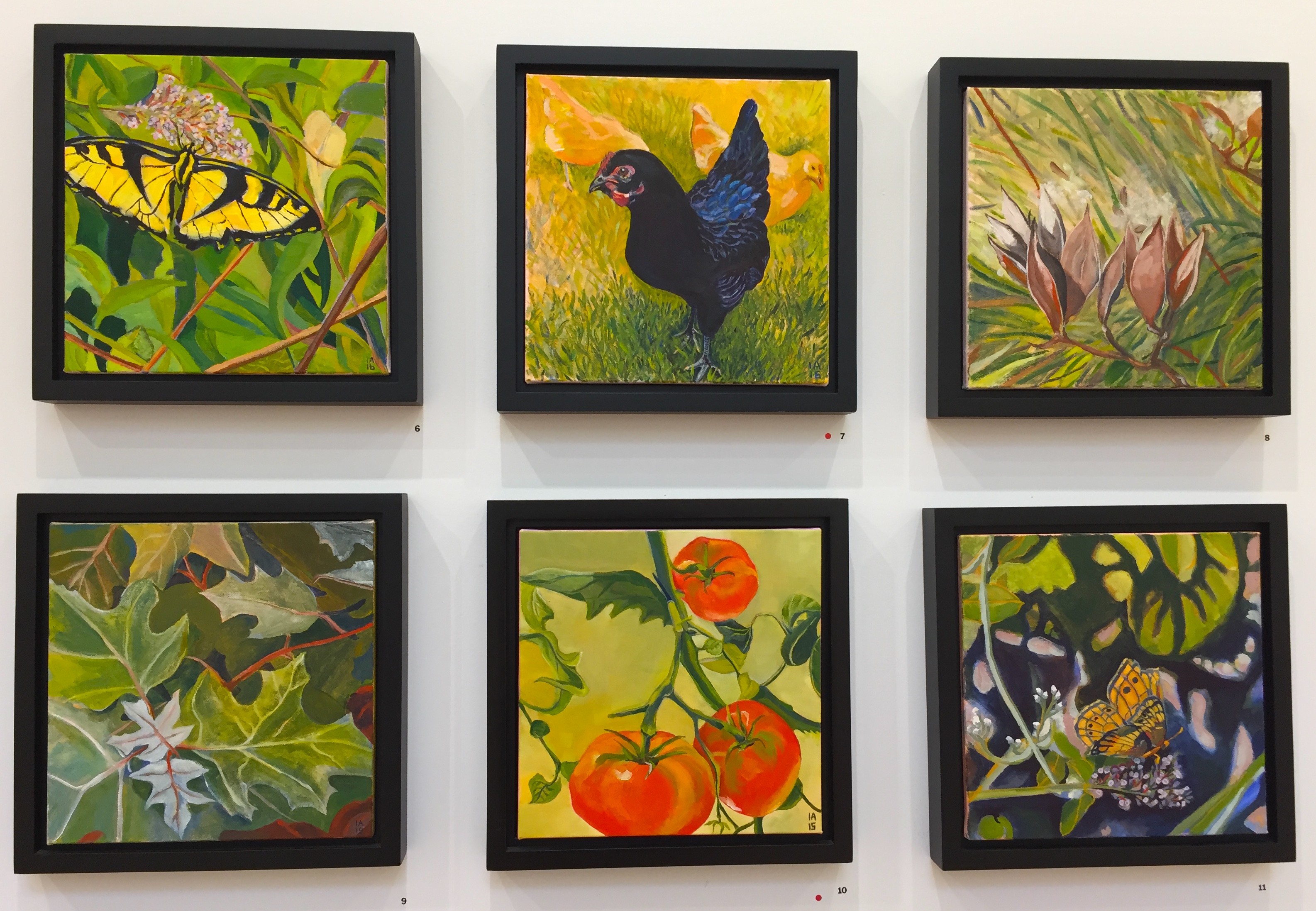
Artwork by Ms. Dixler

Artwork-in-progress by retired Arts Department faculty member and graphic designer Deborah Dixler. You can follow Ms. Dixler’s new artwork on Instagram.

Deborah Dixler Artwork
Posted in Drawing, Painting | Tagged , , | Leave a comment

Poetry by Elan Lakes ’21 inspired by Langston Hughes

Let Him Be Free

He wants to be free!
The persistent, ever present dream of man himself…
The urge to run.
The urge to simply be.
He wishes to follow his desires
But no! No! This cannot be!
Forbidden! Prohibited!
Against the majority
But does the man care?
Not in the slightest.
He wishes to be free.

Citizen in America

There are words like Bondage,
A looming threat to all.
The dark, gloomy cloud that plagued generations
The cloud is intent on ensuring the fall

Why Speak?

That is not allowed!
Is what they say.
That won’t end well for you!
Is what they say.

But what do I say?
Does it even matter?
Who will listen?
Is anyone there?

Nothing but silence
Many cries left unheard
I begin to wonder…
If there is a reason to call out at all.

So He Walks

The boy knows his neighborhood.
He loves this place,
For it is all he knows.
It is his home.

So He Walks…

He explores…
He travels…
What does he see?
Unknown. Unknown.

So He Walks…

What is this thing?
Unbeknownst to the boy.
It is fascinating, it is everything!
The neighborhood is no longer the same

He No Longer Walks.

What is Mine?

This is mine.
I created it.
Nobody can steal this from me.
Or can they?

Is this truly mine?

They want it!
And it becomes theirs.
Take.
Take.
Take.

What is truly ours?

We influence so much!
So much!
Of what is considered theirs.
We create, and they take.

Is this truly ours?

Langston Hughes
1936 photo by Carl Van Vechten
Posted in Poetry | Tagged | Leave a comment

Visual Art by Jamie Paradis ’20

The following work is a selection of art made by Jamie Paradis ’20:

Posted in Painting | Tagged , , , , , , , , , , , , , | Leave a comment

“Evening at New York” poetry by Young Se Choi ’18

By Anthony Delanoix www.unsplash.com

By Anthony Delanoix www.unsplash.com

“Evening at New York” by Young Se Choi ’18 was published by the Live Poets Society of New Jersey for their “Inside of Me” theme, summer 2016. You can read more of Young Se’s published work on WAM: Selected Works.

1999. New York. I do not exist yet.
It seemed as if the city was finally sleeping tonight
Two adults planted on a paved sidewalk
Male and female, my parents
Holding hands, the vanilla starry sky gleams over their shiny hairs,
My mother’s strawberry lipstick,
My father’s glasses,
Staring into their eyes I try to search for my own self in them
Only to find two black pupils stare into the vast array of nothingness
They knew little of me and of my being,
Me, the child
The failure
The disappointment
The monster
But they were still innocent
They didn’t know
I wanted to stop them
Separate them into their own paths of life
Start over again
But I wanted to live

Posted in Poetry | Tagged , | Leave a comment

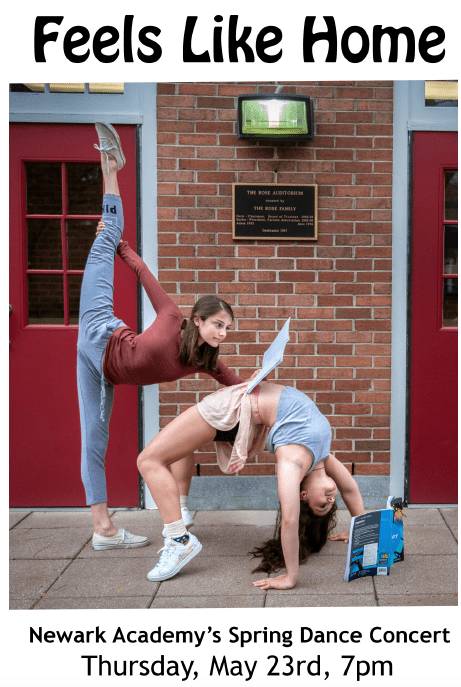
Dance Concert Spring 2019

Welcome to the Spring Dance Concert. I am extremely grateful for my health and the ability to teach these amazing dancers. After missing most of the fall, it truly “feels like home” to be back at the place I love. This is the swan song for our Rose Auditorium so we featured it in this photo with Sophia Ludtke and Jamie Paradis to express our gratitude for what the space has meant to us. We can’t wait to showcase these amazing dancers in our new performance hall when it is finished. I am thrilled to have Megan Ferentinos, who stepped in for me in the fall, back to help us with this show. I hope seeing the energy, grace, and artistry of these dancers will remind us all of our blessings, and all that we have as a community. Love Wins, Yvette Luxenberg

Continue reading

Posted in Dance | Tagged , , , | Leave a comment

“You Used to Make Me Breakfast,” poetry by Jamie Paradis ’20

This poem by Jamie Paradis ’20 titled “You Used to Make Me Breakfast” was selected by judges of Susquehanna University’s 37th Annual High School Writing Contest for publication in the Fall 2019 Vol. 37 edition of the Apprentice Writer, a print and online magazine. This year the contest received submissions from nearly 20 countries.

“You used to make me breakfast”

My mind traps
your words on a
gilded leash
Song stuck in
my head,
Left ear tilted after
I step out of salty low tide,
Won’t stop.
Louder than the hum
of radiators we’ve
grown used to
but say it’s
quiet despite the
buzzing
Once you poured
pancake batter into
a waffle machine,
Sliced strawberries
on top of a rose gold
plate you
handed me.
You smile.
I work in a shoe store
now, but never go
for walks
Once we walked
to the laundromat
And you said to me, “we’re still
not telling people about us”
Secrets are fun
We decided
You decided

Posted in Poetry | Tagged | Leave a comment

“Food Arrangement” photo by Anonymous

Colorful, anonymous photography taken in the Newark Academy cafeteria.

Posted in Photography | Tagged , , | Leave a comment

Drawing by Ashley Sun ’18

This drawing was created by IB Artist and Scholastic National Gold Medalist Ashley Sun ’18. You can find more of Ashley’s work on WAM: Selected Works.

Posted in Drawing | Tagged , , | Leave a comment

Art Exhibit by Paul and Irene Aspell

A fall 2017 Newark Academy exhibit by artists Irene and Paul Aspell incorporated both their sensibilities, combining Paul’s ceramic plates and Irene’s paintings.  The artists have been married for 35 years.

Paul Aspell, who taught at Newark Academy for 16 years, specializes in stoneware pottery. He describes his current work in ceramics as a continuing investigation of texture and form. His training includes a B.A in Art Education and an M.A. in Ceramics. He also studied with talented potters at workshops at Haystack Mountain School of Crafts in Maine and the Peter’s Valley School of Craft in New Jersey,

Many of Irene Aspell’s paintings, which include flora and fauna, draw from her experience as an organic gardener. Irene earned her B.F.A. in Designer Crafts.

The Newark Academy gallery hosts the Aspells’ work every other year, including a 2015 exhibition by Paul, Plates and Platters, and a joint 2013 exhibition, A Marriage of Materials. According to Paul, “The process of making art is evolutionary. The inspiration I receive from creating one piece is infused into the next.”

After Paul retired from teaching in 2002, the couple moved to the Maryland shore, where they have a studio and show their work locally. You can follow Paul’s latest work on Instagram.

Paul Aspell

Irene Aspell

Continue reading

Posted in Exhibit | Tagged , , , , | Leave a comment

PAX Rwanda Exhibit

PAX Rwanda: Embroideries of the Women of Savane Rutongo-Kabuye, an exhibit of vibrant embroideries created by Rwandan artists was featured in the David Teiger ’47 Gallery for the Studio Arts at Newark Academy from September 4 – October 8, 2018. The exhibit was comprised of elaborately rendered scenes of Rwanda’s culture, its people and the beautiful animals of West Africa. Bogota resident Juliana Meehan discovered the embroideries as a tourist to Rwanda in 2010 and curates the collection. In addition to showing the work, Meehan shared her stories of these artists and her experiences in Rwanda with Newark Academy students.

PAX Rwanda is the artistry of the women who are survivors of the 1994 Rwandan Genocide against the Tutsi.  Their original approach to embroidery, using three different colors on one needle, is unique to this workshop and was pioneered by its founder and artistic director, Christiane Rwagatare. Their painstaking technique subtly blends colors and brings their compositions to life, creating with needle and thread what the painter does with brush and paint.

PAX Rwanda has toured galleries and museums in New Jersey, New York, Ohio and Washington DC since 2011.

These three women epitomize the women of Rwanda, past and present, who stylishly wrap themselves in kitenge sarongs with elaborate head scarves, and often swaddle their infants in them as well. Kitenge fabric is made by drawing a succession of patterns in hot wax and dying them different colors as each stage, a technique commonly known as the label “Super Wax.” Look for this detail in the hem

A beautiful Rwandan woman is rendered in exquisite detail. Clad in orange and gold, she fingers her beads and gases dreamily ahead. Fabric softly frames her head and highlights the sensuous curves of her body This piece is a tour de force of the Savanne Rutongo-Kabuye embroidery technique.

Continue reading

Posted in Exhibit | Tagged | Leave a comment

Photography by Stella Gilbert ’22

Below are a few photographs taken by Stella Gilbert ’22 in Barcelona, Spain.

Sagrada Familia

Local Museum

Cotton Candy

Gondola

Postcard

Street Art

Posted in Photography | Tagged , , , , , , , , , | Leave a comment

“Pursuit of Happiness,” Travel Photography by Rachel Glickman ’20


“Last summer, I travelled to the Nuwakot district in Nepal where I worked on building a school for the kids in the village. Every day, all of the children would come down to the worksite and offer their help. We broke through the language barrier of not being able to understand each other verbally, but that did not interfere with the laughs and moments we shared with these people. Pictured here are three children who would come down to the worksite every day and offer not only their help, but their jokes and laughter to our group.”

–Rachel Glickman, ’20


Posted in Photography | Tagged , , , | Leave a comment

“Melania,” Poem by Alizah Rizvhi ’20

Melania by Alizah Rizvi

I stand behind him–tall, proud, and beautiful under the dismal sky. Thousands of people pool out front. Red hats sprinkled throughout. They delight. Not for me, I remind myself.

Breath held. I remain frozen in his steps.

Their applause grows, a reminder to keep my chin up, my smile stiff and tight. Stiff nods of artificial agreement overcome me. Accustomed to it all, my posture grows straighter.

Bolder.

From humble roots to first lady– Was this a blessing or a curse?  Remember to stay still. Movement is emotion and vulnerability is weakness. Feigned contentment plasters my face.

Plasters my future.

No room to slip up anymore. Every movement is broadcasted. Every sigh is a headline. I fail attempts of disassociation. Not sure whether I am doing so from him or from who I have become.

From what I now represent.

Four more years. Maybe eight. We’re ready for scrutiny. Ready for judgment. He drains me. They drain me. Every strand of dignity I once had, gone. I force myself into the confines of his shadow. I’m not ready. Behind him I stand, for better or for worse.

His right hand is held up. Stiff and proud– a king on a burnished throne. Perplexing narcissism etched onto the squint of his eyes furrow of his brow, notches on his belt.

Gold digger. Anti-feminist. Sell-out. A tight grip clasped around my trembling wrist. Another gold-tinged Trump acquisition, a pretty plaything, a beaming trophy set aside golf clubs and gold. I can see the entirety of America gazing on my shape.

Third “beautiful woman” in line.

His eyes, now two fun-house mirrors. The idiocy, his greed, the lack of thought for myself. Every detail amplified and engorged. Constant reminders of the woman I was and shadow I have become.

Posted in Poetry | Tagged , , | Leave a comment

Visual Art by Jessie Luo ’22

The following work is a selection of art made by Scholastic Art and Writing Award winner, Jessie Luo ’22:

Imagination

Sisterhood

Posted in Visual Art | Tagged , , , , , , | Leave a comment

Lyrics by Steve Miller

Maintenance Department member and musician extraordinaire Steve Miller writes his own musical compositions and lyrics. He recently published a book of his lyrics called ALIVE AND ALONE: A COLLECTION OF LYRICS BY STEVIE “FIDDLEBOY BLUE” MILLER, (excerpts below). You can find out more about his book here. Enjoy this creative music!


Posted in Music | Tagged , | Leave a comment

Notre Dame Sketches by Silvy Zhou ’21

These sketches were done by Silvy Zhou ’21 during her visit to the Notre Dame over the past summer. The recent fire inspired her to share these sketches of the architecture and statues on the outside of the cathedral.

Posted in Visual Art | Tagged , , , | Leave a comment

“Other Gods,” Scholastic National Medal-Winning Fiction by Annika Inampudi

This flash fiction story by sophomore Annika Inampudi ’21 earned a 2019 Scholastic Art & Writing National Silver Medal. This is Annika’s second National Medal. As an eighth grader she won a 2017 Gold Medal for her flash fiction story, “Stolen Hearts.” Congratulations Annika!

“Other Gods”

The morning of her death, Mrs. Abernathy of Apartment 22A of Sheridan Road wakes up before the light hits. The first thing she does is open all the windows and take a deep breath, for a woman who cannot see only feels alive when she breathes.

Her house is simple and pragmatic, and in that way it suits her. The single story duplex has nothing in it, and most people believe that nobody lives there. Oftentimes, the family next door will help her out– she pays the young one to do the grocery shopping for her, and the mother sends leftovers as a courtesy. Shivering, Mrs. Abernathy shuffles towards the kitchen, where there is breakfast already waiting for her. In the slow way that all elderly do things, she eats the oatmeal carefully, her thin fingers shaking around the spoon as she lifts it toward her mouth. Each time, she sinks the spoon into the bowl, oatmeal spilling over the edges. Each time she brings it to her mouth, there is almost nothing left.

Eventually, Mrs. Abernathy finishes her oatmeal, washes the bowl out, and places it on the dishrack. The sun has risen by now, and the frail woman can feel the warmth on her hands as she sits on her bed and puts on a record. The music fills the room in a way that Mrs. Abernathy is still left hungry. It’s an old song.

There is not much for a blind woman to do but think.

Around noon, Mrs. Abernathy hears the door click.

“Ah, come over darling, you can put the bags up on the counter,” she says. There’s a rustling noise in the kitchen. She hears the padded footsteps turn into her room.  “Do you have time to stay?”

She hears the figure settle onto the chair in the corner of the room.

“School is going well, I presume? Don’t spend too much time thinking about it. I remember when I was a young girl, some years younger than you, my father was stationed in Kolkata for some time. That year, my mother told me that if I got good marks on all my exams, we were going to take a trip to Delhi for my summer vacations. So I studied hard and she assented—in that way good marks can do well for you. The train there—it was marvelous—I had never known India to be so beautiful in such a diverse way. If you ever have the chance, dear, take a visit. I promise you there is so much more to the world. All the things that I have learned, I have learned outside of this town.”

Mrs. Abernathy pauses at this, and the music seems to fade back into the foreground again. In that moment, Mrs. Abernathy feels a loss unlike any other. She wishes for the chance to re-experience that feeling, that one feels when they are young, when they see the sheer grandness of the world for the first time. She sighs, then turns her head in remembrance.

“It was strange, actually, that trip. As we entered the platform, this man grabs my shirtsleeve. A beggar. He looked me in the eye—it should have been frightening, but instead it was just a bit unsettling—and he said, ‘Do not waste this,’ in perfect English, and he let go of my wrist. I gave him 10 paisa and he looked up and praised God.”

Mrs. Abernathy then looks down at her own wrist and puts her other hand around it in a ghost of the motion that happened over eighty years prior. She hears the girl shift impatiently.

“I thought nothing of it until a train arrived at the platform, and I saw the same man through the grid windows, in a suit and tie and gold watch sitting in the car, reading the paper. I suppose I found it bizarre, but it was India and there are so many men in India that it would not be inconceivable that two look the same. As the man in the suit exited the train, he dropped a figurine in my palm—one of their gods, I think. And on the platform, I saw the beggar again, and he waved to me. I think I waved back. And my father led me onto the train and I never saw either of them again.”

Another gust of wind enters the room. Mrs. Abernathy shivers.

“I don’t know what it means. Sometimes I think the moment so surreal that I made it up in my mind. But I know this–nobody but God can be two people at once.”

She hears the girl get up. Mrs. Abernathy tries to shake her hand, but misses.


When Bailey Curtis of 22B Sheridan Road comes to drop off her neighbor’s groceries, all of the windows are open. Bailey puts the plastic bags on the floor and grabs the fifty-dollar bill on the kitchen counter. It’s almost dinnertime—Bailey can barely see where she’s going. Underneath her rustling, there’s music playing.

Bailey follows the music into her neighbor’s room, and she sees the elderly woman on her bed. The woman’s eyes are open and soft, pointed towards the crumbling ceiling. Brushing away fallen plaster, Bailey moves to check her pulse. Touching her fingers to the soft flesh under the woman’s wrist, Bailey feels nothing.

She moves her fingers to Mrs. Abernathy’s hand and lays it gently against the other. A plastic figurine falls from the old woman’s hand to the floor.

Bailey picks it up. It’s Vishnu, the Hindu god. The paint is chipped and the divots of the cheap plastic scratch her fingers, but there’s a profoundness to its modest appearance. She puts it back, cupped between the woman’s hands.

The curtains stir, ushering in a new gust of wind, and Bailey swears she sees the dead woman shiver.

Posted in Fiction | Tagged , , , , | Leave a comment

Photography by Tess Kesler ’22

The following photographs were taken by Scholastic Silver and Gold Key award recipient Tess Kesler ’22.  Tess’s work was on display at the Montclair Art Museum in late winter through spring of 2019.

Weathered Generation

Reading Light

Posted in Photography | Tagged , , , , , | 1 Comment

2019 Community Art Show

The Newark Academy 2019 Community Art Show curated by Arts Department Head Elaine Brodie, themed “House & Home,” was exhibited in the David Teiger ’47 Gallery for Studio Arts. The installation featured works of art by students, parents, faculty, and alumni of the NA community, and displayed a variety of mediums including photography, paintings, and sculptures. Enjoy these photos of the gallery, as well as closeup shots of several pieces!

Continue reading

Posted in Visual Art | Tagged , , , , , | Leave a comment

“Sostenuto,” Flash Fiction by Olivia Mudrick ’20

The following story by Olivia Mudrick ’20 was awarded a Scholastic Gold Key for Flash Fiction.

Sostenuto

Frédéric Chopin was confined to an armchair.

George, perched on the edge of the sofa nearby, watched him intently.

His condition had gotten worse. His coughs were frequent, each one louder and longer than the last. He stared across the room, his eyes fixed on the Pleyel in the corner, the one that he’d brought all the way from Paris to have with him.

He had agreed to come in the hopes of finding better weather, some sunshine to clear his head and lungs from Paris’s damp streets. But, the clouds followed them here, trailing behind like spider silk, trapping the man in his own misery. Even now, the sound of pattering rain consumed the room. Each drop echoed down to the sitting room, chilling George to the core. The soft thuds on the roof mocked the two of them, the constant water was inescapable.

George never would have come if she’d known how bad it would be. She had sent the kids away to give Chopin some space, but nothing seemed to help. He had turned in on himself, folding over until he was nearly invisible, dissolving into the fabric of the chair.

The rain picked up.

George started to notice something else behind the rain. A pattern of sorts. As the rain grew heavier, a rhythm repeated on all sides of the roof, echoing. The soft pitter patter had given way to a thundering applause.
Seeing no change in his expression, George touched Chopin’s hand, attempting to draw him back to the present.

“Frédéric,” she said, “listen.”

He first looked to the window, watching as streaks of rainwater stained the glass, racing towards the ground. Then looked up, as if trying to catch a glimpse of the clouds through the ceiling panels.

After a few minutes of staring upwards, Chopin still hadn’t moved. Worried, George shook his arm.

“Fryk, what is the matter?”

He tore his gaze away from the ceiling to look at her. His eyes were wide, shiny. His face pale with sickness. With his frail limbs and sunken cheeks, to George, he already looked like a corpse.

“Come,” she said, gripping his arm harder, “we’ll take you out of here.”

He spoke for the first time in hours.

“Not yet.” He said, his voice thick. He coughed once and then sat up with difficulty. With George’s help, he got to his feet and made his way over to the Pleyel.

Once seated on the bench, he grabbed sheets of paper and a pencil from the piano top. He rested them on the bench beside him, and, with one last look towards the ceiling, he began to play.

Photo by Lorenzo Spoleti on Unsplash

Posted in Fiction | Tagged , , , , | Leave a comment

“Skye,” Fiction by Amaani Jetley ’22

The following story by Amaani Jetley ’22 earned a 2019 Scholastic Art and Writing Gold Key Award for Flash Fiction.

Jake Givens
Photo by Jake Givens / Unsplash.com

Skye

Attempt 1-

You walk out onto the green field to find just what you feared. Golden hair locked among green roots of the grass, dress floating like a graceful cloud, a hand enclosed around some precious object. She gazes into the blue, as if searching the sky, but no breath escapes her lungs. Wings fold over her broken heart as she rests in the grass. You try to reach her, but she is already flying away.

Attempt 2-

You run into the field. She stands there, perfectly still, back turned. Horror fills your lungs, suffocating your voice. You watch soundlessly as she raises something to her lips. A faint smile forms. She falls to the ground.

Attempt 3-

You catch her again, staring into the sun. You call her name. She turns, surprised. She waits for something, but dread burns through your throat, and fear chains you to the ground. She smiles. Her hand raises to her mouth. She is lost to the sky.

Attempt 4-

You call her name. She turns around, caught unaware. You tell her to stop. She smiles. You yell at her to stop. Her hand raises upward. You scream.

Attempt 5-

You call her name. She turns. You forget the chains at your feet and run to her, begging her to stop, but she is faster than light. She slips out of your hands.

Attempt 6-

She stands there once more, back turned. You run at her and manage to grab both of her hands. You try next to open her clenched fist. She yells, demanding you leave her alone. She is strong, but your desperation is stronger. You pry her hand open and snatch what’s inside. A tear lines her perfect face. You look at the object in your hand. It’s an empty bottle.

Panic clutches your heart. You whip your head around, dumbfounded. She is flying into the sun.

Attempt 7-

Her back is facing you, challenging you to come forward once more. Your heart heaves, but you manage to call her name. She turns once more. You ask her why.

The moment is too beautiful, she replies.

Attempt 8-

You cannot take it anymore. You break down, tears flooding your vision, your cry echoing through the field. She turns, frowning slightly. She lowers her hand and makes her way towards you, golden hair dancing through the pleasant wind.

You can cry over a lost cause, she says, or you can find beauty in the moment.

You look up, dazed. She dissolves into light.

Attempt 9-

You walk onto the green field to find just what you expected: A perfect angel, staring up into the timeless sky. You look at her broken heart and smile. You lie next to her and take in all of the swirls of blue that have been crammed into now. The clouds dance above you, putting on a most spectacular show. You hone in on one that seems to have a most peculiar shape. It’s almost as though it’s her, waving.

Posted in Fiction | Tagged , , , , | Leave a comment

8th Grade Face Vessel Artwork

During the period from 1810 to 1865, an abundance of functional ware was made at the remote Edgefield potteries in south Carolina and sold to neighboring countries and states. These potteries were worked in part by slaves who turned the pots, pushed the wheels, carried the wares, and loaded the kilns. In their free time, these slave artisans made pieces of their own choosing. They chose to make face vessels. One unanswered question concerning these small jugs relates to the message they were intended to convey. That message was once clearly understood by the slave population but is lost to us today. We believe their meaning was based in African traditions and an expression of their heritage, but the lack of documentation leaves gaps in historical data about the pottery. Face vessels have been found along the route of the Underground Railroad, evidence of their importance to the fleeing slaves.

Middle school students paid homage to these early artisans by making their own face vessels in Mrs. Brodie’s Ceramics class. Continue reading

Posted in Visual Art | Tagged , | Leave a comment

“Sunset,” Painting by Tyler Barron ’20

Acrylic painting by Tyler Barron ’20.

Posted in Visual Art | Tagged , , , | Leave a comment

Poetry Out Loud 2019

In January, English students in the Upper School were invited to memorize and perform a work of poetry from the official Poetry Out Loud website. These students had two weeks to prepare their recitations before performing in class, where one student from each class was voted into a school-wide competition. Here is Brian Dion ’20‘s outstanding performance of “Harold & the Purple Crayon” by D. Gilson, which earned him a title as the school’s finalist. Brian performed the poem at the Poetry Out Loud New Jersey regional finals at the South Orange Performing Arts Center on February 12, 2019.

Here are other poetry recitations, including student performances by order of appearance: Annika Inampudi ’21, Skywalker Li ’22, Jackson Powers ’22, Jordan McCray-Robinson ’21, Kylie Bill ’21, Leah Shiff ’22, Mason Kung ’22 , Meghan Feldman ’20, Meredith Kean ’22, Adrien Chouraqui ’22, Nikki Narayanan ’21, Ruthie Gu ’21, Sadie Kim ’22 and Vittoria Socolof ’22.

Posted in Poetry, Theater | Tagged , , | Leave a comment

IB/Advanced Art Exhibit 2018

A Fall 2018 exhibition of IB/Advanced Art in the David Teiger ’47 Gallery displayed a rich variety of genre and subject matter. The below sampling from the show includes artists Quinn Butler, Sophie Chang, Rebecca Dunayev, Rachel Glickman, Danning Hu, Maya Kannan, Phillip Kim, Sophie Licoste, Neha Maddali, Julie Marcano, Rhea Mishra, Justine Seo, Sanjana Sridhar,  Madison Verrone, Joyce Wang, Lillian Wu and Melisa Yaman.

Rebecca Dunayev ’19 Paper on Masonite

Sophie Licoste ’19
Watercolor on Paper

Sophie Chang ’20
Photography and Pen on Paper

Continue reading

Posted in Visual Art | Tagged , , | Leave a comment

“The Greed Game,” by Kianni Keys winner of Young Playwrights Competition

This piece won first place at the THEATER PROJECT‘s seventeenth annual Young Playwrights Competition Performance and was honored at an awards ceremony on March 9 at the Cranford Community Center. Kianni saw her work performed by professional actors of The Theater Project. The event was free and open to the public and was proudly supported by grants from New Jersey State Council on the Arts, Investors Foundation, and the New Jersey Theatre Alliance.

This is Kianni’s second time placing in this contest; last year she came in third place with her play “Smile,” which also won the Writers Theatre of NJ Young Playwrights Competition.

Read the play here:

The Greed Game

Posted in Theater | Tagged , , , , , , , , | Leave a comment

Art Gallery Work by Justine Seo ’19

Here is a selection of paintings and mixed media artwork by 2019 Scholastic Art Award recipient Justine Seo ’19!  Justine had her work displayed in the gallery along with the other IB artists.

Justine reflected on her art display saying, “A lot of my art is made by combining different objects I’ve encountered that usually wouldn’t be seen together, creating a surreal environment. I’ve really enjoyed my art class at school for the last two years. It has really allowed me to grow as an artist!”

Below are photos of Justine installing her work, along with the pieces themselves.

Justine with her artwork

Kiki Loves Me!

Class Doodle

Korean Summer

Justine hanging Korean Summer in the Gallery

Posted in Visual Art | Tagged , , , , , , | Leave a comment

“Kiss Later” by Radhika Mohan from the IB Playwriting Festival

Radhika Mohan ’20 wrote this short play for NA’s bi-annual 24-hour IB Playwriting Festival in which students write, direct and perform original plays in a single day. Click on the link to watch it performed by Kianni Keys ’19, Madeline Levinsohn ’19, and Zach Kessel ’19.

Script: KISSLATER-copy


Posted in Theater | Tagged , , , , , , , | Leave a comment

Unnathy Nellutla ’19 Scholastic American Voices Nominee

This poem by Unnathy Nellutla ’19 earned a 2019 Scholastic Art & Writing Award Gold Key for Poetry and was selected by judges as one of five nominees from New Jersey for the prestigious American Voices Medal.

Before 9/11

When my mother turned sixteen
her father flaked away like dust
on the roof of his sand-colored house in South India
leaving her his unsmiling photographs
and gold bars
to be made into wedding jewelry.

Years later, when she married my father holding
twenty gold bangles on each arm
her mother lined her eyes and told her
the gold was not a dowry
but an asset
for the bride.

On the plane to America with my father and his sister
she wore filigree shackles up to her elbows
then locked them in a cracked plastic box under the bed
in a Jersey City apartment
and began to call my father the names
her mother had called her father,

My Sun, My Gold, My Gold.
My Gold is only a little less than
My King.
Those first months of marriage
she slept a few nights a week in the guestroom
with her new sister-in-law
a girl she had known on the playground in Hyderabad
who had sung her an auspicious song
Shame, shame, puppyshame
All the boys know your name.

Ten years later they giggled in the dark
Jersey City bedroom over stories from their school days.
In a new country it was comforting to know
someone still thought of you like sliced brown bread
easily pulled apart.

My aunt hugged my mother goodbye
with the cracked plastic case full of stolen gold
tucked into her luggage,
leaving my mother in a clean city
made of plain rice and lemon in a bowl.
My mother never looked under the bed just to try the bangles
on with the scratchy Hindi radio and so
never cried in the tiny rooms with the radio on.
Never made calls, faraway demands.
Never was told by a man who loved his sister
to get over the loss,
pressing her stick-colored arms against the white
walls of the apartment.

Eight months later my father had to shave
his beard and stay inside for a week,
and she thought
he was a good man.

Posted in Poetry | Tagged , | 1 Comment

Melanie Kramarchuk ’22 NJCTE Bronze Medal Winner

Melanie Kramarchuk was awarded a NJCTE Bronze Medal for Fiction for her short story “FALLING.” The story was written in response to a challenge from Mr. Scerra to write something inspired by author Ted Chiang’s style in which form matches content. Melanie was honored at a NJCTE Award Reception on April 11, 2019 in Scotch Plains. Excerpts from winning work were performed by the Union Catholic High School Forensics Club. Congratulations, Melanie!

FALLING

The tunnels threaded through the earth, spanning the entirety of the planet’s inner layers. Their size and quantity were such that, were the earth to be cut in half, it would be seen that there was little material between the tunnels, separating one from another. This was inevitable, for so much of the earth had been dug up to the surface for the sake of creating these tunnels that very little had remained below the crust. And so the earth no longer hid dirt and gravel and rock beneath its face, but rather an endless maze of tunnels leading into the depths of the planet. The material that had once filled these tunnels now formed mountains on the earth’s surface so that one could not help but think that the earth was being turned inside out. Continue reading

Posted in Fiction | Tagged | Leave a comment

“Contrast + Harmony,” Photography Portfolio by Gillian Cohen ’19

The following portfolio by Gillian Cohen ’19 entitled “Contrast + Harmony” won a Gold Key in the 2019 Scholastic Art and Writing Awards and will be considered for National Honors.  Gillian’s work was on display at the Montclair Art Museum through March 17.

Arm + Wing

Man + Machine

Impressionism + Images

Continue reading

Posted in Photography | Tagged , , , , , , | Leave a comment

Bullet Journal Doodle by Jamie Paradis ’20

Check out this awesome notebook doodle by Jamie Paradis 20′!

Posted in Visual Art | Tagged , , | Leave a comment

Hamlet Staging by Margery Leit ’20

Enjoy this creative staging of Shakespeare’s “Hamlet” created by Margery Leit for her her IB English class.

HAMLET Staging

Set Design: The theatre is a small theatre that could seat about 150 and it is theatre in the round style. The actors perform on a raised platform with the audience surrounding the actors and there are aisles that the actors use throughout the performance. The platform that the actors perform on is about two feet in height and there are small steps leading up to it from each aisle at each of the corners. The play has minimal set to it with few objects added and taken on for scenes. During this scene there is a small bench in the center of the stage. The bench is simple and understated and it’s a shorter bench. Besides the actors, the bench center stage is the only set piece that is on stage for this scene. Below is a general diagram about what the stage would look like during my scene and the corners are number in order to make the stage directions more clear.

Lighting: In this scene the lighting will have a transition. Lights come from all sides so that the actors are well lit from all perspectives of the audience. The lights have a slight amber cast to them as well as dimmer than the other scenes throughout the show, in order to show the darkness that is constantly surrounding them.

Costume Design:

HAMLET: wears a bright red tunic and black pants, slight gold accents around the neck collar of his tunic, white socks, and black shoes. Around HAMLET’s waist he has a belt which a small and sharp dagger is hanging off of and that dagger is there throughout the entire show

HORATIO: wears muted colors, brown pants with high white socks and black shoes. Very Elizabethan England style clothing. Around his waist is a belt that has a long sword hanging off of it, and the sword is relatively dull, meaning that it is more for show than for stabbing anyone. Continue reading

Posted in Theater | Tagged , , , | Leave a comment